
RERA Benefits for Homebuyers: How Does RERA Protect Property Buyers?
Quick Summary
RERA safeguards homebuyers as RERA projects are more transparent, developers are liable for delays, and buyers have well-defined legal remedies in case of a mishap. By buying RERA registered projects, like the Pragnya RERA registered projects, the buyer is entitled to verified project information, predetermined timelines, and stronger RERA rights for homebuyers as compared to what they would have in unregistered projects.
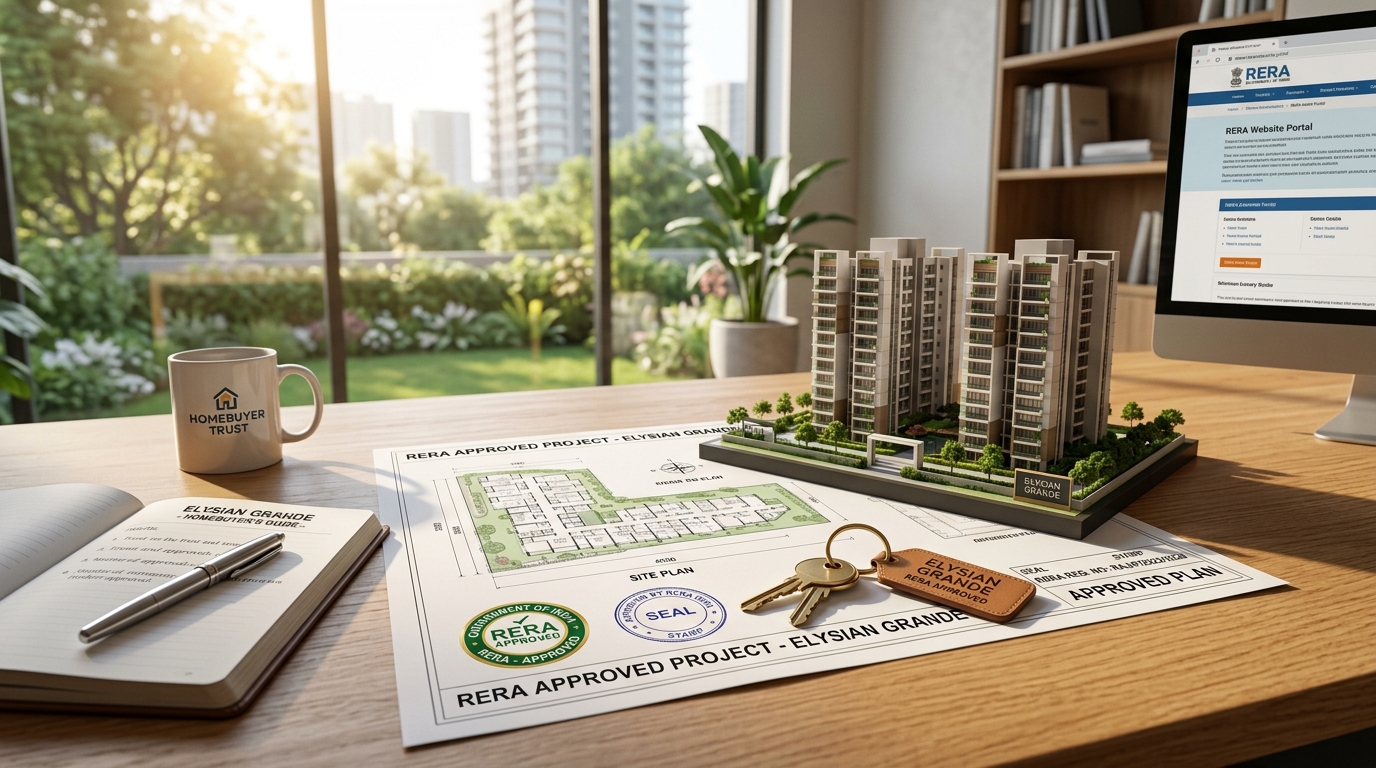
Table of Content
- ■Introduction
- ■What is RERA and Why Was It Introduced?
- ■Key Benefits of RERA for Homebuyers
- ■How RERA Promotes Transparency in Real Estate Projects
- ■RERA Protection Against Project Delays
- ■Understanding Carpet Area Under RERA
- ■RERA Rules for Advance Payments and Project Funds
- ■Homebuyer Rights and Grievance Redressal Under RERA
- ■How to Verify the RERA Registration of a Property
- ■Conclusion
RERA safeguards homebuyers as RERA projects are more transparent, developers are liable for delays, and buyers have well-defined legal remedies in case of a mishap. By buying RERA registered projects, like the Pragnya RERA registered projects, the buyer is entitled to verified project information, predetermined timelines, and stronger RERA rights for homebuyers as compared to what they would have in unregistered projects.
Introduction
Buying a home is one of the biggest financial decisions most people make, and for the longest time, it also came with a fair amount of risk. Delayed possession, mismatched promises, unclear payment terms. These were common complaints long before regulation stepped in. That's really where RERA changed things. The Real Estate (Regulation and Development) Act was introduced to bring some much-needed order to a sector that, frankly, needed it.
Today, when you see RERA projects, you are actually seeing projects that are formalized under a certain set of guidelines, which is designed to protect buyers like you. Whether it's clarity on project details, timelines, or fund usage, RERA holds developers accountable in the real world. In this blog post, we will discuss what RERA is, how it benefits homebuyers, and how you can check if a project is registered or not before you buy.
What is RERA and Why Was It Introduced?
The real estate sector in India was largely unregulated. Buyers had to place their trust in a developer's word, with no easily verifiable project information, no ability to check timelines, and no one to hold accountable if things didn’t work out.
Yes, RERA was brought in to fix that. It introduced the requirement that developers must register their projects (for both Indian and foreign buyers) with the state-level real estate regulatory authority before advertising or selling units. This registration process involves disclosure of information about the project, timelines, land titles and approvals, providing buyers with much better visibility before they part with their money. That’s also why a solid understanding of what RERA registered property means has become such a crucial aspect of buying a home these days.
Key Benefits of RERA for Homebuyers
RERA provides a handful of grounds for protection for buyers, including but not limited to those highlighted here; a few among these are particularly useful for the average buyer:
- Compulsory registration of the projects prior to their sale or advertising
- Reliable, authenticated project details in the public domain
- Specified possession dates with fines for default
- Limit on developers' access to buyers' money
- A precise definition for carpet area to prevent confusion in pricing
- A redressal mechanism in the form of a complaint and resolution system
Taken together, these protections tilt the balance of power back in favor of the buyer, a long overdue change in a market where there was no such thing previously.
How RERA Promotes Transparency in Real Estate Projects
If anything, the biggest impact RERA will have is in transparency - plain and simple. Developers are now obligated to provide comprehensive project details, including ownership of the land, approved layout plans, timelines, work status reports, etc on the respective RERA portal. That means homebuyers don’t have to rely on marketing brochures.
This applies to RERA registered residential projects as well; however, in addition to promoter details, history of past projects and any legal disputes related to the land. Homebuyers looking for Pragnya property RERA details or similar information on other builders can now do more on their own rather than relying on a sales pitch, making the entire buying process a lot more informed.
RERA Protection Against Project Delays
Possession Delay was one of the biggest complaints in real estate, and RERA addresses this issue squarely. Registered projects have to make a specific completion date, and developers deemed to be holding on to that date can be penalised. Basically, we are talking about:
- The anticipated date of possession must be explicitly mentioned by the developers during registration.
- Purchasers can be entitled to monetary compensation or interest in the event of an unreasonable delay.
- Buyers can also, in certain cases, walk away from the project and get their money back, with interest.
This marks a significant change from the previous pattern, where delays were often ignored as buyers had no official platform to complain.
Understanding Carpet Area Under RERA
Before RERA, it was difficult to know what you were getting when you bought a home. Developers would quote prices on super built-up area, which included common spaces, walls, and stuff that was not the real living space.
Now RERA has rectified this by requiring that the price be on carpet area, that is, the space that you actually get to use inside your unit. This should lend the numbers a certain panache, and also a simplicity, so that buyers can more easily make apples-to-apples comparisons across properties, and know exactly what they are paying for rather than have some secret inflation embedded in the numbers.
RERA Rules for Advance Payments and Project Funds
RERA also places clear restrictions on how much a developer can collect upfront and how those funds must be used.
| RERA Provision | What It Means for Buyers |
|---|---|
| Advance payment cap | Developers can't collect more than 10% before signing a formal agreement |
| Escrow account requirement | 70% of buyer funds must be kept in a separate account for construction |
| Fund usage restriction | Money can't be diverted to unrelated projects |
| Registration disclosure | Fund utilisation details are available on the RERA portal |
These RERA rules for property buyers were designed specifically to prevent developers from using one project's funds to finance another, which was a fairly common issue before regulation came in.
Homebuyer Rights and Grievance Redressal Under RERA
Regulations are not only imposed on developers but also on buyers, providing an avenue to air their grievances and get them addressed. If a developer misses the mark, be it a delay, a modification in project plans, or a disagreement over what was promised, buyers can now go directly to the state's RERA authority. Among the RERA Home buyer rights core rights are,
- Realtors should submit accurate and up-to-date information concerning the project.
- The Right of the Buyer to Possess the Property on Time as Per the Registered Date/s
- The Right of the Home Prospective Purchaser to Compensatation for Unaccelerated Delay
- The right to complain and seek resolution from the RERA authority.
- The right to know in what manner the money collected is spent
This structured grievance redressal mechanism is a huge part of the reason why RERA is touted as a game changer for homebuyer protection in India.
How to Verify the RERA Registration of a Property
Before finalising any purchase, it's worth taking a few minutes to verify the project's RERA status yourself rather than relying purely on what a sales representative tells you.
Here's a simple checklist:
- Visit your state's official RERA website
- Search for the project by name or registration number
- Check the developer's registered details and past project history
- Review the declared timeline and current construction status
- Confirm that the layout and unit details match what's being marketed to you
For anyone looking into RERA registered projects by Pragnya Projects, including specific RERA details of Pragnya Edenverse, this same verification process applies; checking the relevant state RERA portal directly is always the most reliable way to confirm Pragnya RERA compliance and registration status before making a decision.
Before sealing the deal on any purchase, take a little time to check on the project's RERA status yourself and don’t solely bank on what a sales representative tells you. Here's a simple checklist:
- Visit your state's official RERA website
- Search the project name/registration number
- Verify the developer’s registered details and previous project track record
- Check the declared schedule and current construction progress
- Make sure the plans and unit specifications are the same as those you’re being sold.
If you're new to RERA registered projects by Pragnya Projects, or wish to know the specific RERA details of Pragnya Edenverse, this process of verification is what still stands. It is best to always consult the respective state RERA portal directly to 'affirm' the Pragnya RERA compliance and registration status before you commit.
Conclusion
RERA has certainly made the process of buying a home in India more transparent, accountable and buyer-friendly. More action on projects, timelines for delivery, systemised resolution of grievances – the upside is hard to exaggerate. While you are searching for Pragnya residential projects RERA status or for any other builder projects, checking out the registration details is not something you should take lightly but should be considered as one of the best things to do before signing up for a home.